
-
About Us
About Us OverviewCorporate Information

Meet Gen Re
Gen Re delivers reinsurance solutions to the Life & Health and Property & Casualty insurance industries.
TOP
Gen Re delivers reinsurance solutions to the Life & Health and Property & Casualty insurance industries.
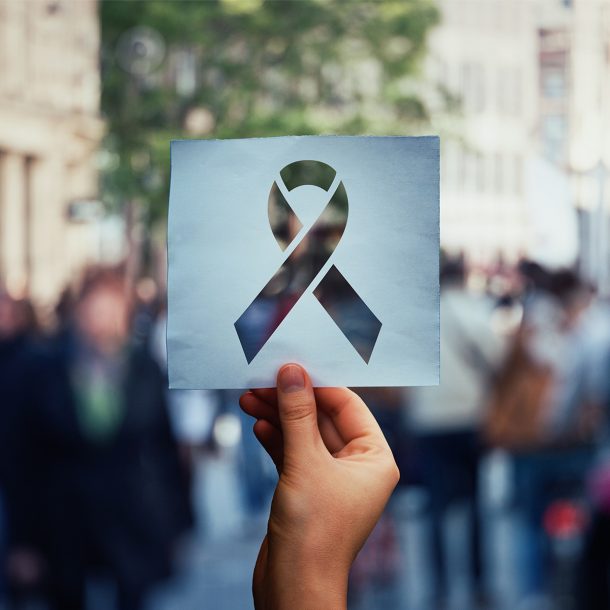
On World AIDS Day (1 December 2022), we reflect on the HIV/AIDS pandemic journey and on the status quo of the quality of life of people living with HIV(PLHIV).
The HIV pandemic officially dates to 1981, when the US Centers for Disease Control and Prevention (CDC) reported five young men diagnosed with unusual cases of opportunistic infections in Los Angeles, California.1,2 All died of their disease. Shortly thereafter, the causative agent of their ‘mysterious’ disease was identified to be the human immunodeficiency virus (HIV) which develops into AIDS (acquired immunodeficiency syndrome).3 Later it was discovered that the HIV pandemic had started around the 1920s in Kinshasa,4 the Republic of Congo, and that HIV originated from a chimpanzee.5
Today HIV still affects many people worldwide. New HIV infections have been reduced by 52% since their peak in 1997, but there are still 1.5 million individuals who were newly infected with HIV in 2020, and an average of 37.7 million PLHIV in 2020.6 Global summaries mask the regional variations, however. East and southeastern Africa continue to be the epicentre of the HIV pandemic, and certain key populations carry a higher burden of HIV infections.7 The HIV pandemic is therefore not over, and infection is still more common in certain regions and target populations.
Nevertheless, AIDS is no longer listed in the top 10 death causes globally, instead it is widely seen as a chronic disease.8 Healthcare for PLHIV has improved in the last 20 years, due to the development of more efficient treatment and improved adherence, preventive measures, and comorbidity management.9
HIV infection can be treated using antiretroviral therapy (ART).10 ART advancements have changed the status quo of this disease from a death sentence into a manageable chronic condition.11 ART has reduced HIV morbidity and mortality rates, leading to a life expectancy approaching that of the general population.12 Thus, PLHIV are surviving longer, and much of the remaining excess mortality in PLHIV is not caused by AIDS, but due to risk factors such as smoking, injecting drugs, and comorbidities.13 However, life-long adherence to ART is necessary for PLHIV.
Life-long adherence to ART remains a challenge for PLHIV due to several behavioural and socioeconomical hurdles. Treatment fatigue and pill burden are some of these hurdles, although the ART regimen may nowadays be combined into a single pill. In addition, ART is not free of adverse effects.14 Socioeconomic factors such as education level, employment status, financial status, housing, and health insurance are additional hurdles, which have shown to be associated with the virological and immunological response of PLHIV, and with adherence to ART.15
To date, there is no practical cure for HIV and prevention remains the best “cure”. While the ideal prevention would be via an effective HIV vaccine, this remains a scientific challenge yet to be overcome. A promising HIV vaccine is currently being investigated by Moderna, International AIDS Vaccine Initiative, and Scripps Research Institute.16
There remain other preventive measures for HIV such as adopting a healthy lifestyle and better habits (e.g. safe sex). HIV can also be prevented via pre-exposure prophylaxis (PrEP), a medication for those at higher risk of HIV exposure. Post-exposure prophylaxis (PEP) is a medication which is given immediately after a known exposure, so HIV infection might still be prevented with prompt treatment.17
In 2013, UNAIDS set up a global initiative called 90-90-90, which set new targets to end the HIV pandemic. This global initiative was aimed to achieve the following by 2020:
In 2021, 85% of PLHIV were aware of their HIV status, among which 88% were accessing treatment, and among which 92% were virally suppressed.18 The updated target is set by UNAIDS as 95-95-95, which is to be achieved by 2025,19 although progress has been remarkable more effort is still needed to achieve these goals globally.
Numerous awareness campaigns are actively involved in public education on HIV, which help among others in detaching the disease from the associated stigma.20 As we have also witnessed with the juxtaposing COVID-19 pandemic, spreading awareness is of utmost importance. The so-called “infodemic” (i.e. epidemic of information) and misinformation impact the course of a pandemic.21
Based on current scientific literature and recent data on global statistics on HIV/AIDS, the mortality rate of PLHIV is decreasing significantly with improved awareness and control measures. This would be reflected in the improved insurability of PLHIV. While an HIV cure or vaccine are still scientific challenges, research in this direction is promising.
Advances in ART and international initiatives to prevent and control HIV have already contributed to improving the quality of life for PLHIV. Gen Re’s CLUE guidelines are being updated accordingly.