Disability insurance is an important component of an individual’s overall financial strategy. It provides financial support in the event of an unanticipated accident or illness that prevents an individual from working. It reduces the stress often associated with disability, allowing the individual to focus on their health and recovery. Actuarial projections from the U.S. Social Security Administration (SSA) in 2020 indicate that one in four 20‑year-olds will be out of work for at least a year because of a disabling condition before their retirement age.1 A common misconception is that disabilities are primarily caused by work injuries. However, most disabilities are not work-related and therefore are not covered by Workers’ Compensation.
Heart disease, cancer, mental health issues, musculoskeletal issues and diabetes are key contributors to long-term disability. Compelling evidence highlights the growing need for Income Protection and the importance of having Disability insurance.2 We will explore some aspects of Disability insurance underwriting, including some of the nuances of assessing morbidity risk.
Disability Insurance Underwriting – Complexity and Nuance
There are four key elements evaluated for Disability insurance: health, occupation, income, and lifestyle. While health history is often the primary focus, it is important to use a holistic underwriting approach and consider each element carefully when assessing the risk. Does the medical history have an impact on the applicant’s ability to perform the essential requirements of their occupation? Are there economic or financial concerns that could impact earnings? Do they participate in activities that may put them at a higher risk for injury/disability?
Underwriters must assess the risk of future impairment, often working with limited or incomplete information. Individuals may have multiple subjective complaints that must be evaluated for their possible association with medical impairment. The medical diagnosis(es) may not be clear, prompting the underwriter to piece together the information on file to determine “what is most likely?” Each applicant is unique, requiring careful evaluation and critical thinking by the underwriter. The goal in Disability insurance underwriting is to provide excellent client value while making a balanced risk assessment.
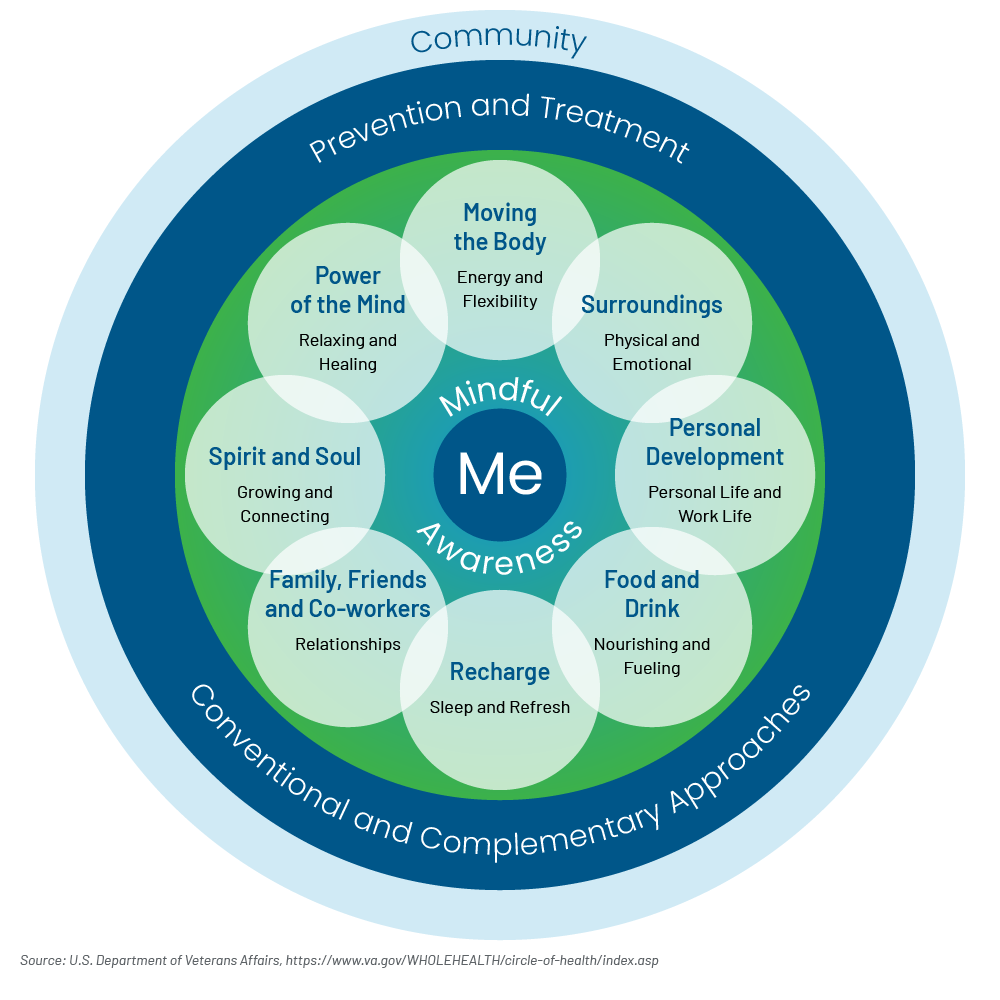
Medical analyses ideally involve a “whole person” assessment, considering the connection of health to the biopsychosocial context of the individual. The U.S. Department of Veterans Affairs (VA) Whole Health Program represents an excellent example of a holistic approach to health represented by the image below of the “Circle of Health.”3 This graphic illustrates the dynamic relationship between health and many other aspects of life.
The Circle of Health